Red, Green or Black Algae on Exterior Walls: What Is It and How Do You Remove It?
Red, green or black staining on exterior walls is a common sight on homes and buildings across Ireland. It can develop on painted walls, render, masonry and other exterior surfaces, particularly in areas that remain damp, shaded or slow to dry.
Although these marks are often described simply as dirt, much of the discolouration seen on exterior walls can be caused by biological growth such as algae, mould, lichen and other microorganisms. Different types of growth can also occur together, which means colour alone isn't always enough to identify exactly what is present.
That distinction matters because the safest and most effective way to clean an exterior wall depends on both what is causing the staining and what the underlying surface is made from.
At CleanSafe, we assess the surface and contamination before deciding how it should be treated. In many cases, particularly on render and painted finishes, the answer isn't simply to reach for a pressure washer.
Why do exterior walls turn red, green or black?
Exterior walls are constantly exposed to moisture, airborne spores and organic material. When a surface stays damp for long enough, it can provide favourable conditions for biological growth to establish.
This is why staining is often more noticeable on north-facing or shaded elevations, beneath trees, close to vegetation, around sheltered areas and on sections of a building that receive less direct sunlight or airflow.
Ireland's generally mild, damp climate can make these conditions particularly common.
The colour of the staining can provide clues, but it shouldn't be treated as a definitive diagnosis. Green growth is commonly associated with algae, while red or pink staining can also be biological in origin. Dark or black staining may involve algae, mould, lichen, atmospheric contamination or a combination of different materials.
The surface itself also matters. Painted render, unpainted render, concrete, brick and natural stone can behave differently and may require different cleaning methods.
This is one reason why identifying both the surface and the likely contamination should come before choosing how to clean it.
What is green algae on exterior walls?
Green staining is one of the most common forms of biological growth found on exterior walls. It tends to develop where surfaces remain damp and receive limited sunlight, which is why it is often particularly noticeable on shaded or north-facing elevations.
On render, painted walls and masonry, it may begin as relatively light green discolouration before becoming more widespread if conditions continue to favour growth.
Simply removing the visible green colour does not necessarily address the biological contamination present on the surface. An appropriate treatment can target the growth itself rather than relying solely on mechanical cleaning or water pressure.
The correct treatment will depend on the surface, its condition and the extent of the contamination.
What causes red or pink staining on exterior walls?
Red or pink staining is commonly seen on rendered and painted exterior walls and can be particularly noticeable on light-coloured finishes. Like green growth, it is often associated with microorganisms that thrive where moisture remains available on the surface.
It may appear as small patches or streaks initially before spreading across larger areas of an elevation. Sheltered walls, areas close to vegetation and surfaces that remain damp for longer can be particularly susceptible.
The staining can sometimes look as though it has penetrated deeply into the wall. However, where the discolouration is biological in origin, an appropriate cleaning treatment can target the organisms responsible and allow the appearance of the surface to improve.
It is important not to assume that aggressive pressure washing is required simply because the staining is pronounced. On some rendered or painted surfaces, excessive pressure can potentially damage the finish while failing to address the underlying biological growth.
What causes black staining on exterior walls?
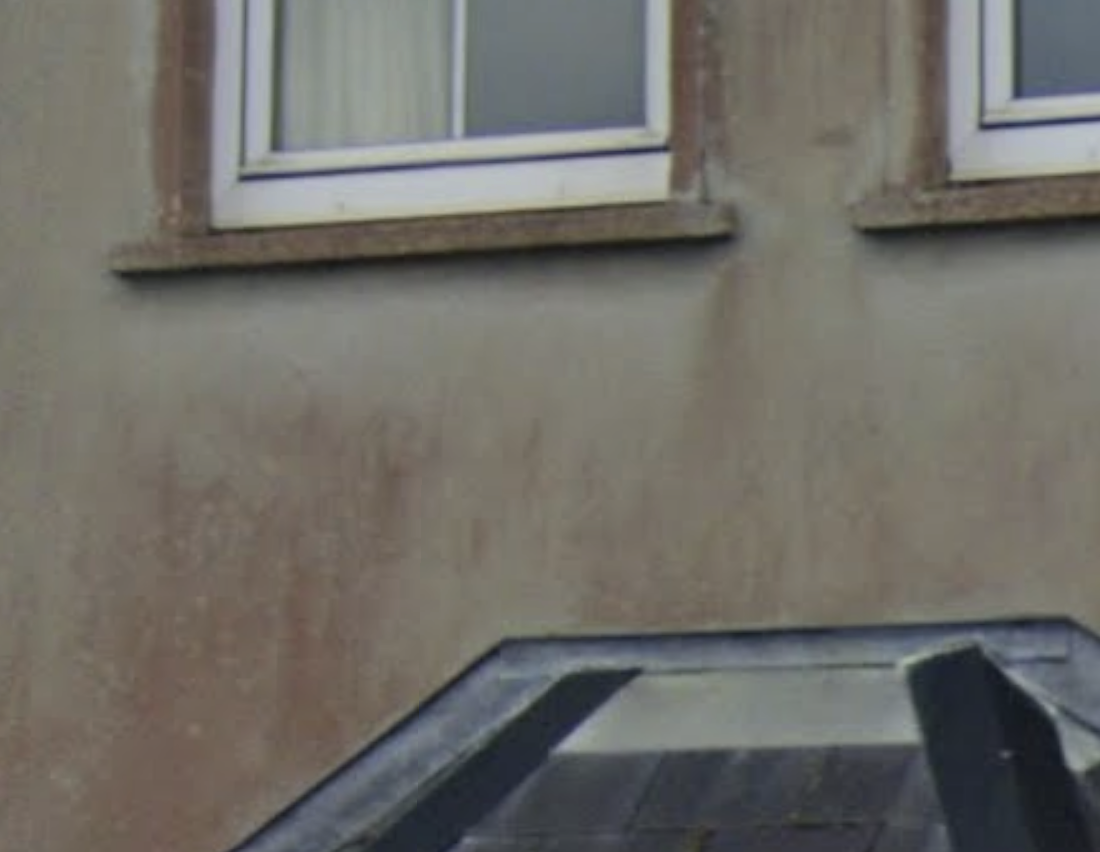
Black or very dark staining needs a little more care when identifying the cause because not every black mark on an exterior wall is algae.
Dark discolouration can be associated with biological growth such as algae, mould or lichen, but it can also result from atmospheric pollution, dirt, water run-off or a combination of contaminants. In some cases, staining around window sills, rooflines, vents or other architectural features may follow patterns created by rainwater repeatedly running across the surface.
For this reason, colour alone should not determine the cleaning method.
The surface should first be assessed to establish what it is made from, its condition and the likely cause of the staining. A treatment suitable for biological growth may not be the correct solution for staining caused primarily by another contaminant.
This is particularly important with render and painted finishes, where using an unnecessarily aggressive cleaning method can cause more harm than the original staining
Should you pressure wash algae from exterior walls?
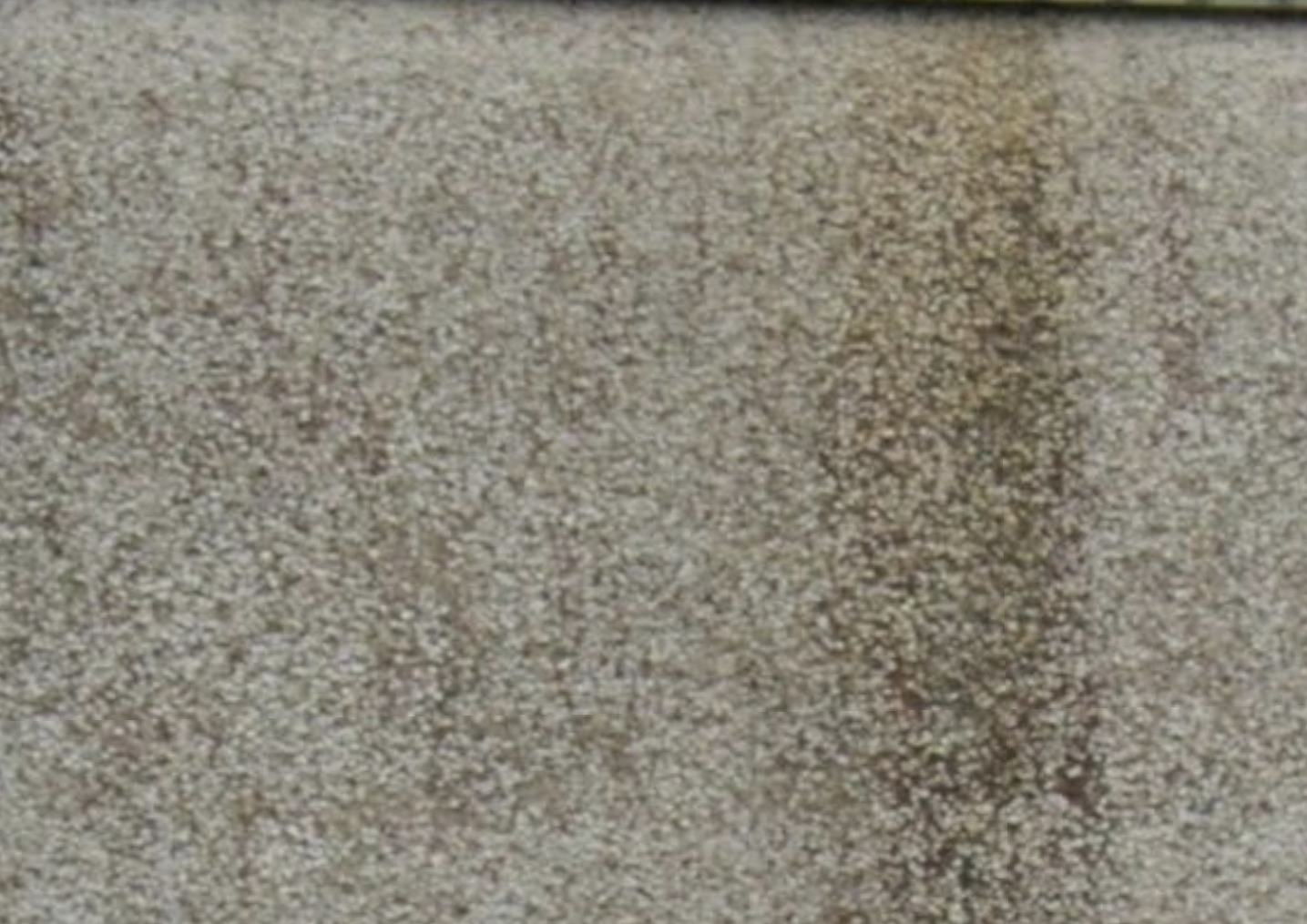
Pressure washing can be effective on suitable hard surfaces, but it is not automatically the right method for cleaning algae and biological growth from exterior walls.
Render, painted finishes and some masonry surfaces can be vulnerable to excessive water pressure. Depending on the surface and its condition, inappropriate pressure washing can damage coatings, mark the finish or force water into areas where it is not wanted.
There is also an important difference between removing visible staining and treating the biological growth responsible for it. High-pressure water may make a surface look cleaner immediately, but that does not necessarily mean the underlying contamination has been properly treated.
This is why CleanSafe selects the cleaning method according to the surface and contamination rather than applying the same process to every property.
Where biological growth is the main problem, a controlled softwashing or biocide treatment may be more appropriate. Pressure washing still has its place, but only where the surface has been assessed as suitable for it.
How does softwashing remove algae from exterior walls?
Softwashing uses carefully selected cleaning solutions applied at controlled low pressure to treat biological contamination on exterior surfaces.
Rather than relying on water pressure to physically blast staining from the wall, the treatment targets the organic growth responsible for much of the discolouration. This can make it particularly useful on surfaces such as render and painted finishes where aggressive pressure washing may not be appropriate.
Depending on the treatment used and the type and severity of contamination, some improvement may be visible relatively quickly, while other staining can continue to fade gradually following treatment.
Biocide treatments can also help control remaining spores and microorganisms on the surface, reducing the likelihood of rapid recolonisation. They do not, however, permanently prevent future growth. Environmental conditions such as moisture, shade, surrounding vegetation and exposure will influence how quickly biological growth eventually returns.
For a more detailed explanation of how these treatments work, see our guide: How Does Biocide Cleaning Work? The Science Behind Softwashing.
How quickly will algae staining disappear after treatment?
The time required for exterior wall staining to disappear depends on the type and severity of the contamination, the surface being treated and the cleaning method used.
Some green biological growth may respond quickly and produce a noticeable improvement during the cleaning process. More established red, dark or heavily weathered staining may take longer to break down and fade.
Where a biocide treatment is used, the finished appearance does not always develop immediately. The treatment continues working on biological contamination after application, with natural weathering helping to remove remaining dead material from the surface over time.
This is why an exterior wall should not necessarily be judged solely on how it looks immediately after treatment. In some circumstances, allowing the treatment time to work can produce a better result than repeatedly using increasingly aggressive cleaning methods.
How long will treatment help keep algae from returning?
Professional treatment can help delay the return of algae and other biological growth, but no exterior treatment can permanently prevent recolonisation.
How long a surface remains clear depends heavily on its environment. Walls that receive good sunlight and airflow may remain cleaner for considerably longer than shaded elevations surrounded by trees or vegetation. Persistent moisture, prevailing weather, nearby organic growth and the orientation of the building can all influence how quickly contamination returns.
A biocide treatment is particularly useful because it targets remaining biological contamination and spores rather than simply improving the immediate appearance of the surface. This can help slow regrowth and extend the period between cleans.
For properties particularly prone to biological growth, periodic maintenance treatment may also be more appropriate than allowing heavy contamination to become established again.
Can I remove algae from exterior walls myself?
Minor biological growth on a suitable, easily accessible surface may sometimes be treated by a homeowner, but there are several factors to consider before starting.
The first is identifying the surface correctly. A product or cleaning method that is suitable for one type of masonry may not be appropriate for painted render, delicate finishes or natural stone.
Cleaning chemicals also need to be selected, diluted and applied correctly. Surrounding plants, lawns, windows, metals and other sensitive materials may require protection, and any product used should be handled in accordance with its instructions and safety information.
Access is another important consideration. Attempting to clean upper-storey walls from ladders while handling equipment or cleaning solutions can introduce unnecessary risk.
Professional cleaning becomes particularly worthwhile where staining is extensive, the surface is delicate or difficult to identify, specialist access equipment is required, or previous cleaning attempts have failed.
The objective should not simply be to find the strongest product or highest pressure available. It should be to identify the contamination and use an appropriate method to treat it without unnecessarily damaging the surface.
Professional exterior wall and render cleaning in Sligo, Leitrim and Donegal
CleanSafe provides professional exterior wall, masonry and render cleaning across Sligo, Leitrim, Donegal and surrounding areas.
We assess the surface, its condition and the type of contamination before selecting an appropriate cleaning method. Depending on the property, this may include softwashing, biocide treatment or other controlled cleaning techniques, with pressure washing used only where the surface is suitable.
Our aim is not simply to make a wall look cleaner on the day. We want to treat the cause of biological staining where possible while using a method appropriate to the underlying surface.
If you have red, green or black staining on your exterior walls and are unsure what it is or how it should be treated, photographs can often help us make an initial assessment before arranging a site visit if required.
-
Red or pink staining can be biological in origin and is commonly seen on rendered and painted walls. Damp conditions, shade and surfaces that remain wet for longer can encourage this type of growth.
-
Green algae thrives where moisture is available and is particularly common on shaded or north-facing walls, around vegetation and in areas with limited sunlight or airflow.
-
No. Black or dark staining can result from algae, mould, lichen, atmospheric contamination, water run-off or a combination of factors. The cause should be assessed before deciding how to clean it.
-
It may remove visible contamination, but pressure washing is not appropriate for every rendered or painted surface and may cause damage if excessive pressure is used. Treating the biological growth itself can often be more appropriate than relying on pressure alone.
-
Biocide treatment can help control remaining biological contamination and delay recolonisation, but it cannot permanently prevent future growth. Moisture, shade, vegetation, weather exposure and the orientation of the wall can all influence how quickly biological growth eventually returns.
-
Not necessarily. If the coating beneath the biological staining remains sound, appropriate cleaning may restore the appearance without repainting. Where paint or render has already deteriorated, cleaning will not repair the underlying finish.
Need help identifying or removing exterior wall staining?
If you're dealing with red, green or black staining on render, painted walls, masonry or other exterior surfaces, CleanSafe can assess the surface and recommend an appropriate cleaning method.
We provide exterior wall and render cleaning across Sligo, Leitrim, Donegal and surrounding areas. You can send us photographs for an initial assessment, or we can arrange a site visit where required.
For more information about the service, see our Exterior Walls, Masonry & Render Cleaning page.