How to Clean Different Types of Flooring: What Products Are Safe for Your Floor?
Choosing a floor cleaner isn't simply a matter of finding the strongest product available. The correct cleaning method depends on what the floor is made from, whether it has been sealed or coated, its condition and the type of contamination being removed.
A product that works perfectly well on porcelain tile may be unsuitable for natural stone. Too much water can cause problems for some wood and laminate floors, while acidic cleaners can damage acid-sensitive materials such as marble and limestone.
Even two floors that look very similar may require completely different treatment.
At CleanSafe, identifying the floor is one of the first steps before carrying out specialist cleaning or restoration. Understanding the surface helps determine not only which cleaning products can be used, but also whether processes such as deep cleaning, stripping, polishing, honing or sealing are appropriate.
In this guide, we'll look at some of the most common hard-floor surfaces found in homes and commercial properties, including porcelain, ceramic tile, grout, natural stone, marble, granite, terrazzo, vinyl and LVT, laminate and sealed wood. We'll also explain what pH-neutral cleaning means and why knowing your floor type matters before choosing a cleaning product.
Why identifying your floor should come before choosing a cleaner
Before deciding how to clean a floor, it is important to know what the surface actually is.
Porcelain and ceramic tiles can look similar to natural stone. Luxury vinyl tile can convincingly imitate timber or stone, while polished concrete and terrazzo may sometimes be mistaken for one another. Even when the material is known, the presence of a sealer, polish or other surface finish can change how the floor should be treated.
Different materials react differently to water, cleaning chemicals, abrasion and mechanical cleaning. A method that is perfectly suitable for one floor can dull, stain, etch or otherwise damage another.
Natural stone is a particularly good example. Marble and limestone are sensitive to acidic products, while granite generally behaves differently. Porcelain is considerably less porous than many natural stones, and wood and laminate introduce their own considerations around moisture.
Professional floor cleaning should therefore begin with identification rather than product selection.
At CleanSafe, we consider the floor material, its finish or coating, its condition and the type of contamination present before deciding on the cleaning process. Where identification is uncertain, testing a small inconspicuous area can also form part of the assessment.
This approach helps answer the most important question first:
What am I cleaning?
Only then should the question become:
What should I clean it with?
How should porcelain tile floors be cleaned?
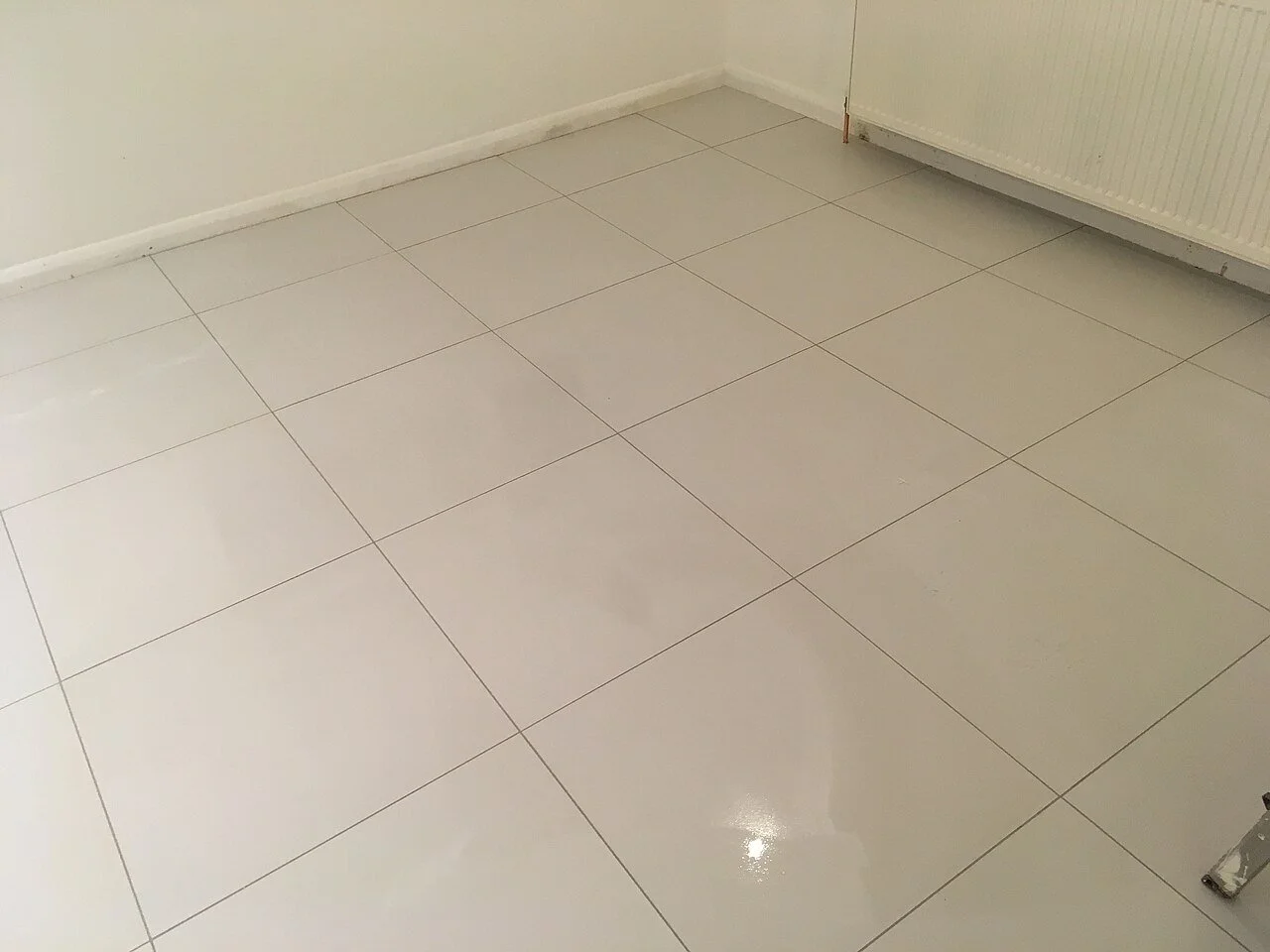
Photo: ColumbD / Wikimedia Commons, CC BY-SA 4.0
Porcelain is a dense, hard-wearing type of ceramic tile commonly used in homes and commercial properties. It is available in a huge range of finishes and can convincingly imitate natural stone, concrete, timber and other materials, which can sometimes make identification difficult from appearance alone.
For routine maintenance, porcelain is generally relatively straightforward to clean. A suitable pH-neutral floor cleaner is often a good choice, particularly where the objective is to remove everyday soil without leaving unnecessary residues.
However, not every porcelain floor behaves exactly the same way. Polished, textured, anti-slip and matt porcelain finishes can respond differently to cleaning, and heavily textured tiles can retain soil within the surface profile.
Grout lines may also require separate attention because grout is typically more porous than the porcelain surrounding it.
For heavily soiled porcelain, professional cleaning may involve an appropriate alkaline cleaning solution combined with mechanical agitation, followed by thorough recovery and rinsing. The product, concentration and agitation method should be selected according to the particular tile and contamination.
Acidic products should not automatically be used simply because porcelain itself may tolerate them. Grout, surrounding materials, metal trims and other components of the floor can react differently, and an acid cleaner will not necessarily be the correct product for the contamination being removed.
Before carrying out intensive cleaning, it is therefore important to identify both the tile and the surrounding materials and, where appropriate, carry out a test in an inconspicuous area.
How should ceramic tile floors be cleaned?
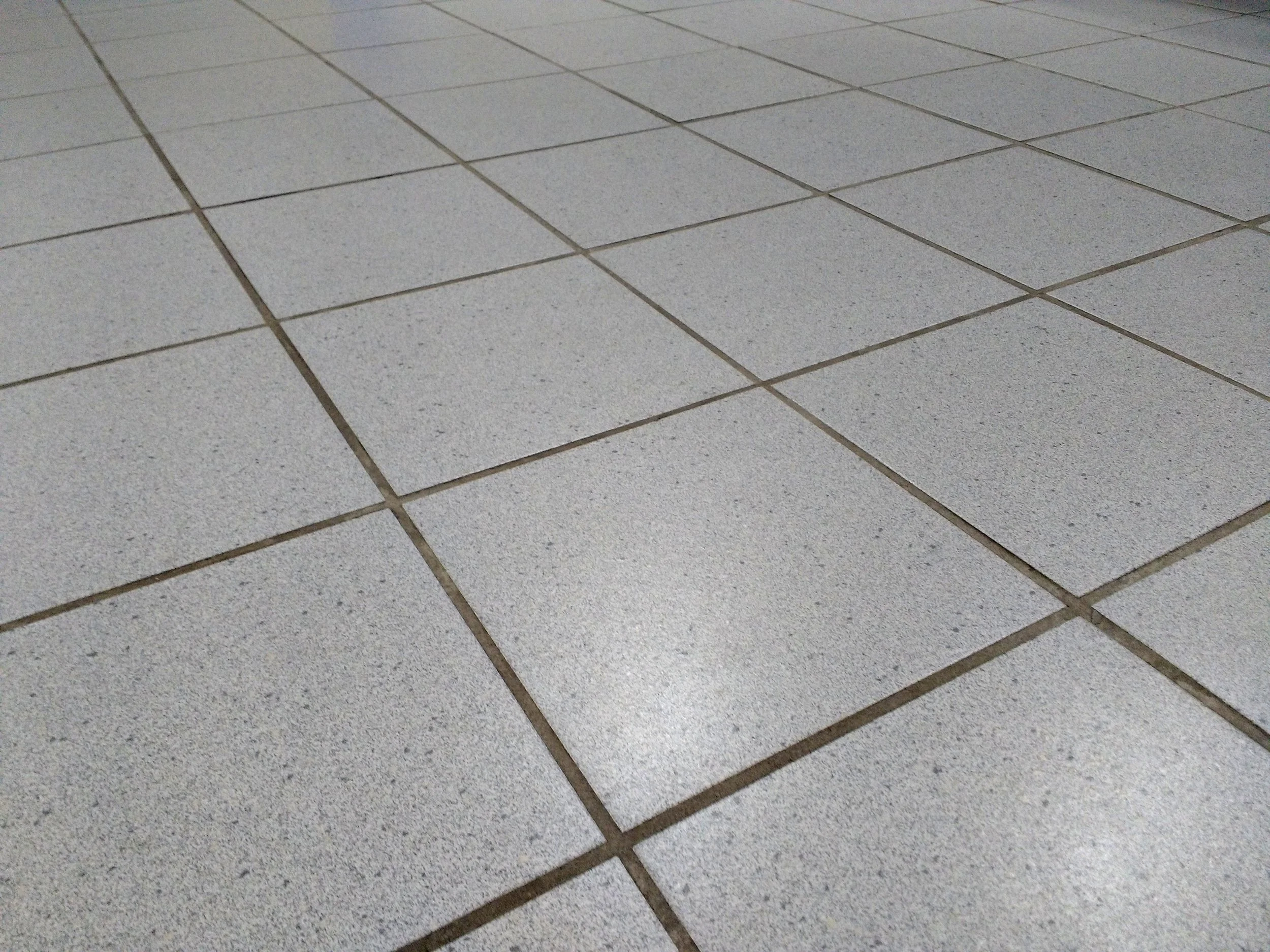
Ceramic tiles are widely used in kitchens, bathrooms, entrance areas and commercial environments. Although they are related to porcelain, ceramic tiles are generally less dense and can vary considerably depending on whether the surface is glazed or unglazed.
Glazed ceramic tiles have a protective surface layer that provides much of the tile's resistance to staining and moisture. For routine cleaning, a suitable pH-neutral cleaner is usually sufficient to remove everyday soil without unnecessarily attacking the surface or leaving heavy residues.
Unglazed ceramic requires more consideration. Without a glazed surface, the tile may be more porous and more susceptible to absorbing moisture, cleaning solutions and staining. Some unglazed floors may also have been sealed, making it important to establish whether a coating or impregnating sealer is already present before using stronger cleaning products.
As with porcelain, the grout can behave very differently from the tile itself. A ceramic floor that appears dirty may actually have relatively clean tiles but heavily contaminated grout lines.
For deeper cleaning, an appropriate cleaner can be combined with mechanical agitation to release embedded soil before the floor is thoroughly rinsed and the contaminated solution recovered.
Abrasive pads, strong acids and highly alkaline products should not be selected simply because a ceramic tile appears hard-wearing. The glaze, grout, sealers and surrounding materials all need to be considered.
The safest approach is to identify whether the ceramic is glazed or unglazed, assess any existing finish or sealer, and then select the cleaning method accordingly.
For heavily soiled tiled floors and grout, CleanSafe also provides specialist tile and grout deep cleaning for domestic and commercial properties.
How should grout be cleaned?
Grout often becomes visibly dirty before the surrounding tiles because it behaves very differently from the tile surface.
Traditional cement-based grout is porous and can absorb moisture, soil, grease and cleaning residues. Over time, this can cause grout lines to darken or become uneven in colour, particularly in kitchens, entrance areas, washrooms and other heavily used floors.
Routine cleaning with a suitable pH-neutral cleaner can help prevent soil from building up, but established contamination may require a more intensive treatment.
Professional grout cleaning may involve an appropriate alkaline cleaning solution, controlled dwell time and mechanical agitation to loosen embedded contamination. The loosened soil and cleaning solution then need to be thoroughly removed rather than simply redistributed across the floor.
Not all grout is the same. Epoxy grout, cement-based grout and grout that has previously been sealed can respond differently to cleaning products and methods. The surrounding tile or stone must also be considered when selecting a chemical.
This is particularly important where grout is installed alongside natural stone. A cleaner that is suitable for the grout itself could potentially damage an acid-sensitive stone such as marble or limestone.
It is also important to distinguish between dirty grout and permanently discoloured or damaged grout. Cleaning can remove contamination, but it cannot restore grout that has physically deteriorated, been deeply stained beyond recovery or lost its original colour for other reasons.
For this reason, grout cleaning should be considered as part of the entire floor system rather than treated in isolation.
How should natural stone floors be cleaned?
Natural stone requires more careful identification than many manufactured floor coverings because different stones can react very differently to cleaning products and restoration processes.
Marble, limestone, travertine, granite, slate and sandstone are all natural stone, but they should not automatically be treated in the same way.
For routine maintenance, a suitable pH-neutral cleaner is generally the safest starting point. Strong household cleaners, acids and products such as vinegar should not be used indiscriminately on natural stone.
This is particularly important with calcium-based stones such as marble, limestone and travertine. Acidic products can react with the stone itself, causing etching, dull patches or permanent changes to the surface.
Another consideration is whether the stone has been sealed. Many natural stone floors are treated with an impregnating sealer to reduce the absorption of liquids and staining. Others may have different surface treatments or finishes. Before deep cleaning, it is useful to establish what treatment is already present and whether it is still performing effectively.
The finish of the stone matters too. A highly polished marble floor, for example, requires different consideration from a textured limestone or riven slate floor.
Professional natural stone cleaning therefore begins with identifying the stone as accurately as possible, examining its finish and condition, and checking for existing treatments before selecting the cleaning chemistry and mechanical process.
Where the surface has become scratched, etched, dull or uneven, cleaning alone may not solve the problem. Depending on the stone and its condition, specialist processes such as honing, polishing or resealing may be required to restore the appearance.
How should marble floors be cleaned?
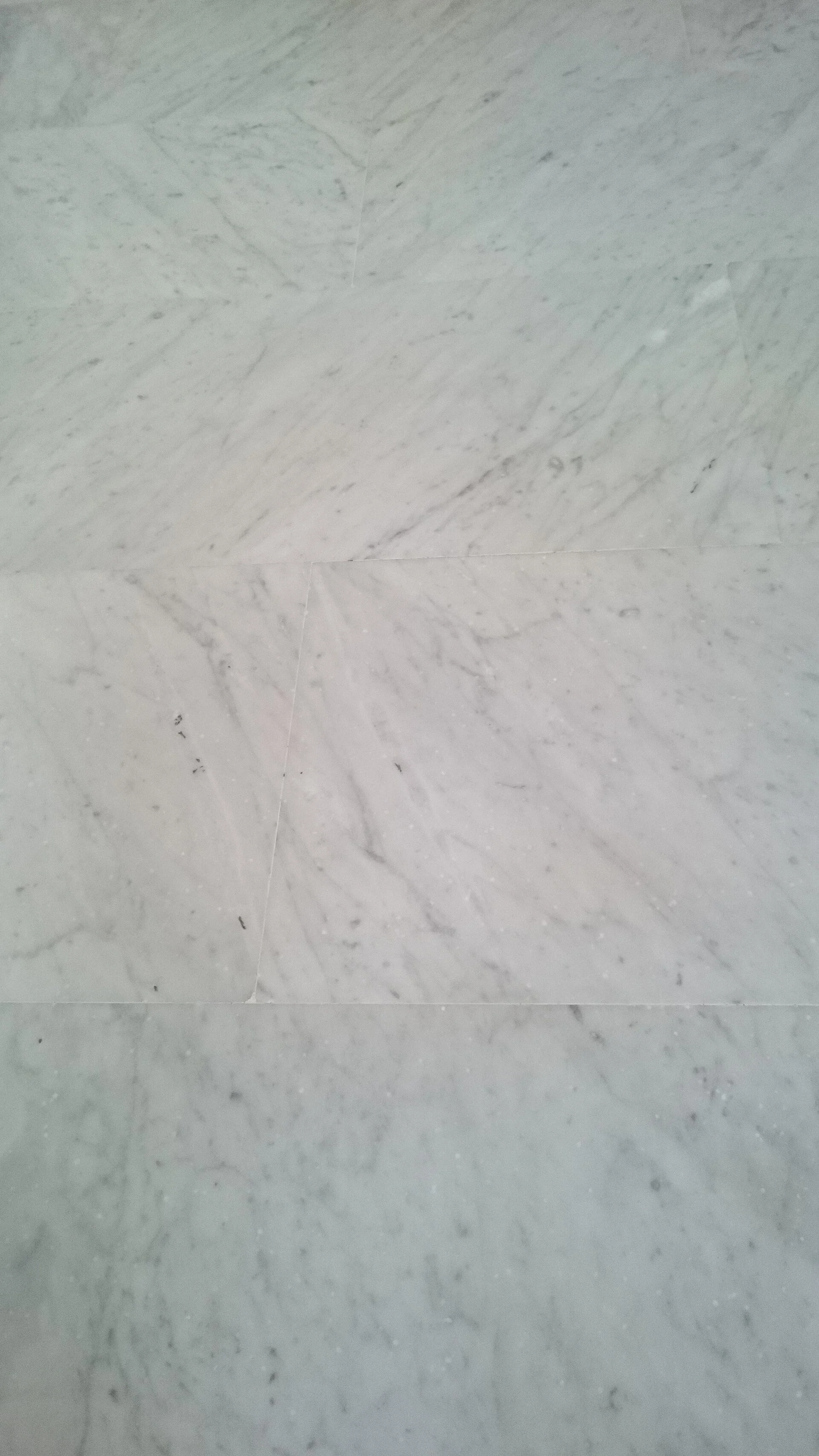
Photo: ProjectManhattan / Wikimedia Commons, CC BY-SA 4.0
Marble is a natural stone that can produce a highly polished and luxurious floor finish, but it is also more chemically sensitive than its hard appearance might suggest.
For routine maintenance, a suitable pH-neutral cleaner designed for natural stone is generally the safest choice. Excess product should be avoided, and dirty cleaning solution should be removed rather than allowed to dry back onto the surface.
One of the most important rules with marble is to avoid acidic cleaners. Vinegar, lemon juice and many acidic bathroom or limescale-removing products can react with the calcium carbonate in marble. This reaction can etch the surface, leaving dull or lighter-looking marks that ordinary cleaning will not remove. This is why vinegar should not be used to clean marble floors, despite frequently being recommended online as a general-purpose household cleaner.
It is also important to distinguish between a marble floor that is dirty and one that has lost its finish. If a polished marble floor remains dull after appropriate cleaning, the problem may be wear, scratching or etching rather than contamination.
In these circumstances, repeatedly using stronger cleaning chemicals is unlikely to restore the appearance and may make matters worse. Specialist honing and polishing can instead be used, where appropriate, to refine the stone surface and restore the desired finish.
Sealing is another separate consideration. An impregnating sealer can help reduce the absorption of liquids and staining, but sealing does not make marble resistant to acid etching. A sealed marble floor can still be damaged by acidic products.
Correctly diagnosing whether marble needs cleaning, stain treatment, honing, polishing or sealing is therefore an important part of caring for the floor properly.
How should limestone and travertine floors be cleaned?
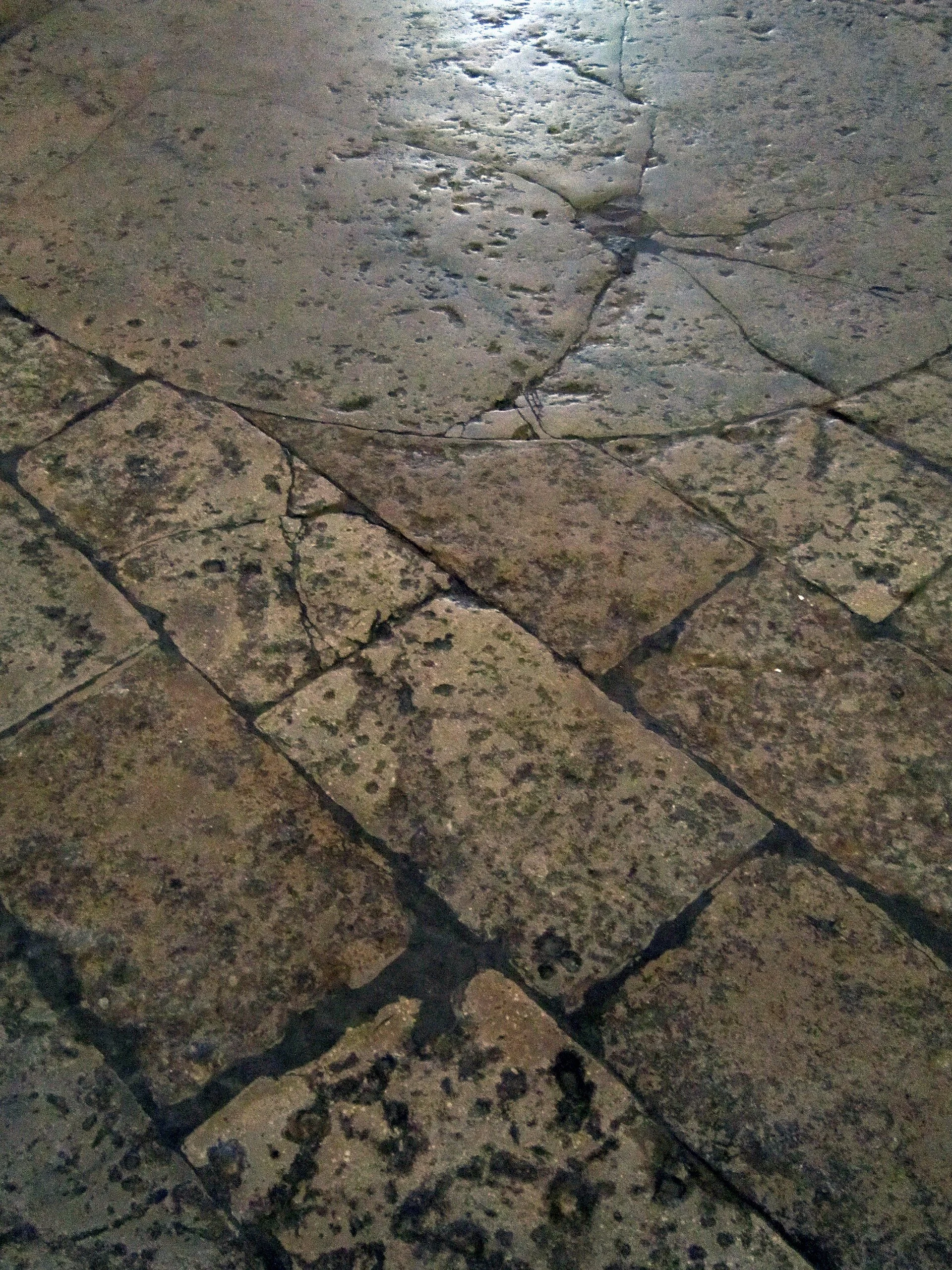
Photo: Jefferson National Expansion Memorial, NPS / Wikimedia Commons, CC BY 2.0
Limestone and travertine are both natural stones that require similar care to marble when selecting cleaning products. Like marble, they are primarily calcium-based materials and can react with acidic substances. Vinegar, acidic bathroom cleaners, limescale removers and other low-pH products can etch the stone, altering its surface and appearance. For routine maintenance, a suitable pH-neutral cleaner formulated for natural stone is generally the safest starting point.
Limestone can vary considerably in density, texture and finish. It may be polished, honed, brushed or textured, and these differences can affect both how readily the floor holds soil and the cleaning process required.
Travertine has another distinctive characteristic: it naturally contains holes and voids. On many floors these are filled during manufacture or installation. Over time, filler can deteriorate or become dislodged, leaving small pits that collect soil. Cleaning may improve the appearance, but it cannot replace missing filler or repair physical deterioration.
Both limestone and travertine are commonly sealed to reduce absorption and help protect against staining. However, a sealer does not make the stone maintenance-free or protect it from every type of chemical damage.
Before deep cleaning, it is therefore useful to assess the stone, its finish, the condition of any filler and whether an existing sealer is still performing effectively.
Where limestone or travertine has become dull, scratched or etched, cleaning alone may not restore the original appearance. Depending on the stone and desired finish, specialist honing, polishing, repair or resealing may be appropriate.
How should granite floors be cleaned?
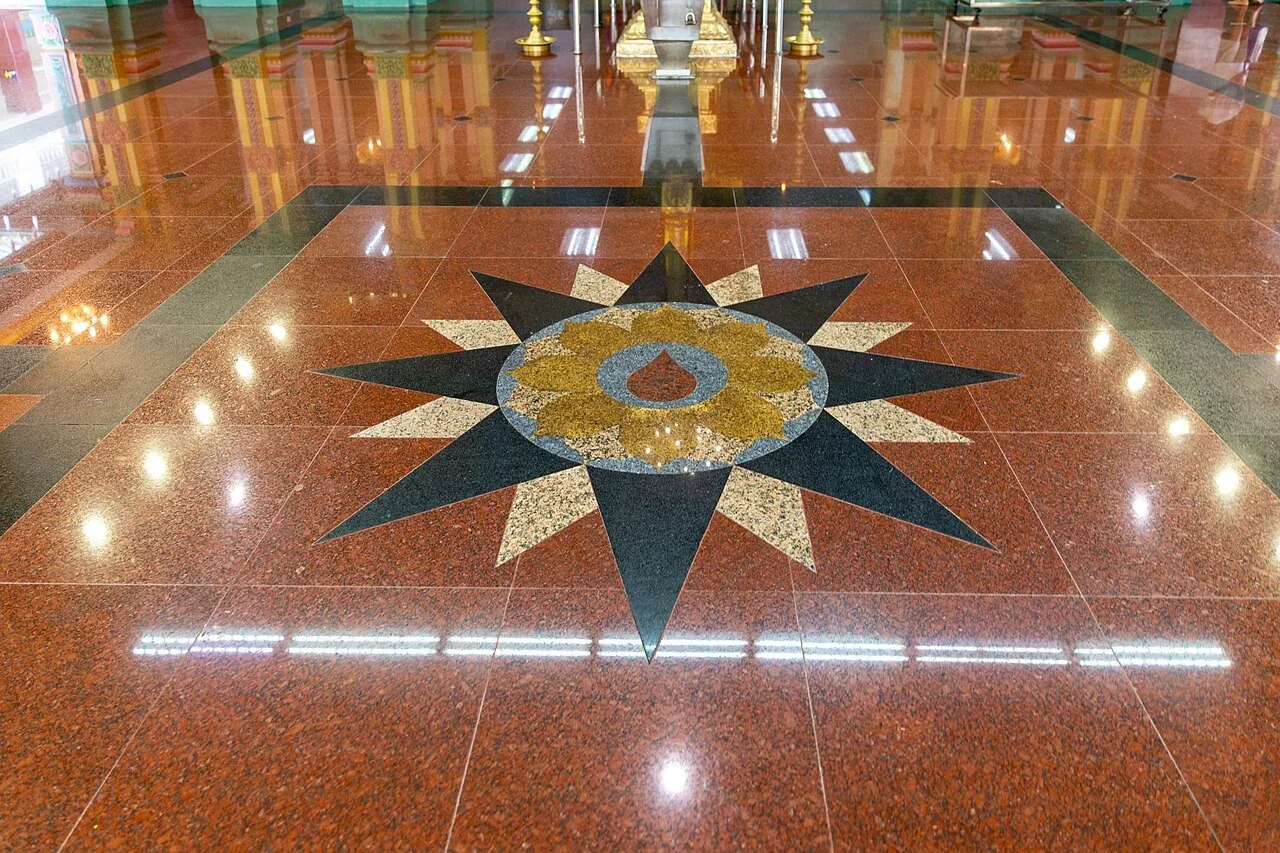
Photo: Shesmax / Wikimedia Commons, CC BY-SA 4.0
Granite is a natural stone, but its properties differ considerably from calcium-based stones such as marble and limestone. It is generally harder and more resistant to scratching and chemical attack, although this does not mean that every cleaning product or method is automatically safe. For routine maintenance, a suitable pH-neutral stone cleaner remains a sensible choice. It provides effective everyday cleaning without unnecessarily exposing the floor, grout or any existing sealer to aggressive chemistry. Granite can be polished, honed, flamed, brushed or given other textured finishes. A highly polished granite floor will behave differently during cleaning from a textured granite surface, where soil can become trapped within the surface profile.
Many granite floors are also treated with an impregnating sealer, particularly where the particular stone has sufficient porosity to benefit from additional stain protection. Different granites vary in their absorption characteristics, so sealing requirements should be assessed rather than assumed. Although granite is generally more resistant to acids than marble or limestone, this should not be taken as a reason to routinely use acidic cleaners. Grout, sealers, adjacent materials and some minerals within the stone may respond differently.
As with other natural stone, it is important to distinguish between contamination and physical deterioration. A granite floor that appears dull may be dirty, but loss of appearance can also result from wear, scratching, residues or deterioration of an existing finish. The correct treatment therefore depends on identifying the stone, understanding its surface finish and determining what is actually causing the problem before selecting the cleaning or restoration process.
How should terrazzo floors be cleaned?
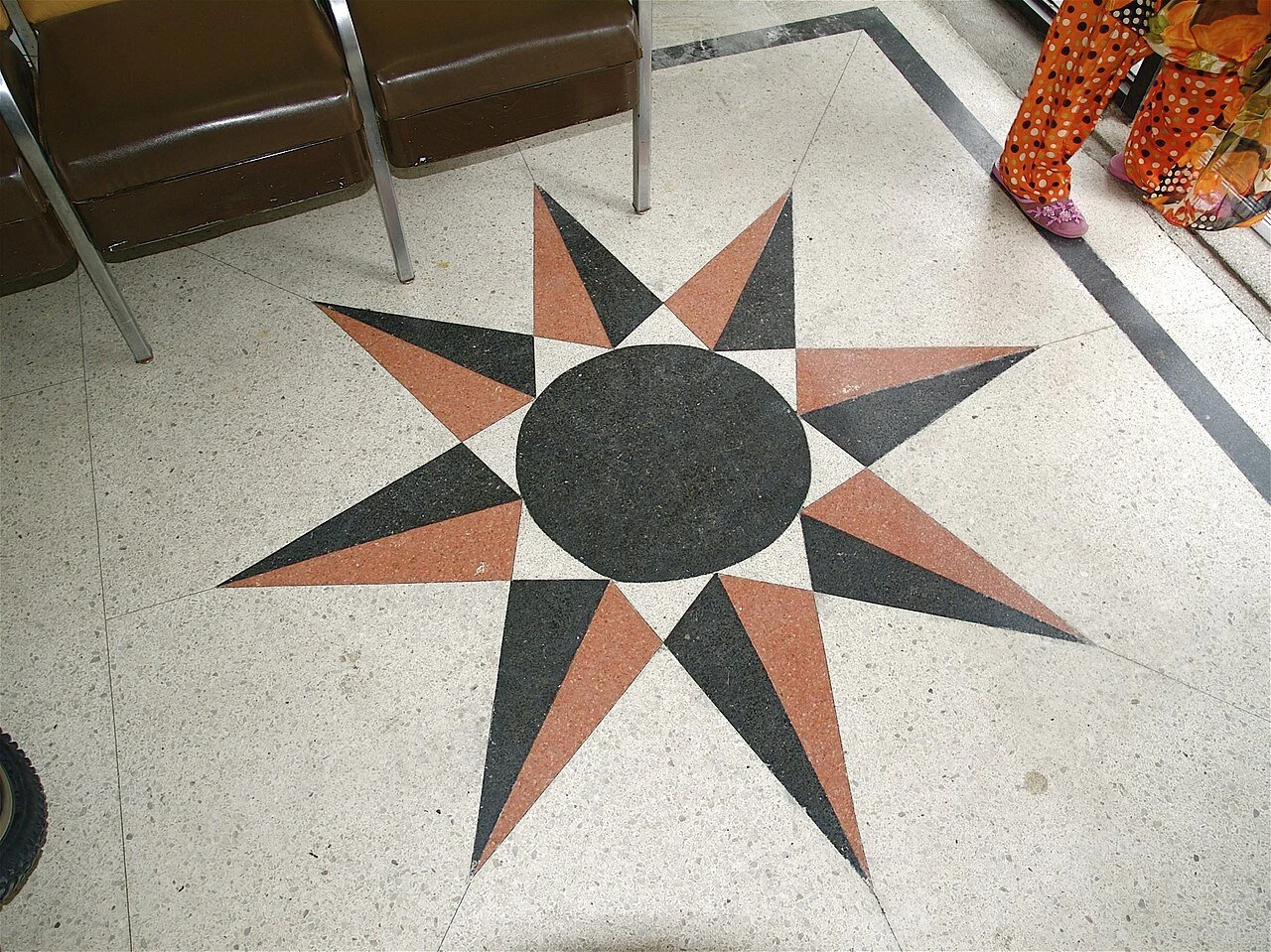
Photo: Sandra Cohen-Rose and Colin Rose / Wikimedia Commons, CC BY 2.0
Terrazzo is a durable flooring material made from chips of materials such as marble, granite, quartz or glass set within a cementitious or resin-based binder. It is commonly found in commercial buildings, schools, public buildings and older properties, although modern terrazzo has also become increasingly popular in contemporary interiors. Because terrazzo can be manufactured in different ways and finished to different standards, identifying the type and condition of the floor is important before deciding how it should be cleaned.
For routine maintenance, a suitable pH-neutral cleaner is generally a sensible choice. Acidic cleaners should normally be avoided on traditional cement-based terrazzo containing marble or other acid-sensitive aggregates, as they can attack both the stone chips and the surrounding binder. Strong chemicals should not be selected simply because terrazzo appears to be an exceptionally hard-wearing floor.
Older terrazzo can sometimes appear dirty when the problem is actually a combination of embedded contamination, scratches, wear and loss of surface finish. In these circumstances, increasingly aggressive cleaning may produce little improvement. Depending on the construction and condition of the floor, specialist processes such as diamond grinding, honing and polishing can be used to remove surface damage and progressively refine the terrazzo to the required finish.
Terrazzo may also have an existing sealer, polish or other protective treatment that needs to be identified before restoration begins. Once properly restored, an appropriate sealer or protective treatment may be applied where required, followed by a maintenance programme suited to the floor and its level of use. This is why terrazzo is a good example of the difference between simply cleaning a floor and professionally restoring it. Where natural stone, marble or terrazzo has become scratched, dull or worn, CleanSafe also provides specialist stone, marble and terrazzo restoration, including appropriate honing, polishing and sealing processes.
How should slate and sandstone floors be cleaned?
Slate and sandstone are both natural stones, but their appearance, porosity and surface characteristics can vary considerably. Slate is often supplied with a naturally textured or riven finish, while sandstone can range from relatively dense material to highly porous stone with a coarse surface. These variations affect how readily the floor absorbs moisture and contamination, so the stone and any existing treatment should be assessed before stronger cleaning products are used.
For routine maintenance, a suitable pH-neutral cleaner is generally a sensible starting point. Textured slate and sandstone can hold soil within their natural surface profile, however, which means mopping alone may gradually become less effective. Where contamination has become embedded, deeper cleaning may require appropriate chemistry combined with mechanical agitation to release the soil from the texture of the stone, followed by thorough rinsing and recovery.
Sealing can be particularly important with more porous stone. An impregnating sealer can reduce the absorption of liquids and make future maintenance easier without necessarily creating a visible surface coating. Some slate floors may instead have been treated with colour-enhancing sealers or topical finishes, which can significantly alter their appearance. Before attempting to strip or deep-clean an older floor, it is therefore important to determine whether the appearance is coming from the stone itself or from a treatment previously applied to it.
Acidic products should not be used indiscriminately simply because slate or sandstone appears robust. Natural stone varies, and cleaners can also affect grout, sealers and surrounding materials. Where the exact stone or existing finish is uncertain, testing in an inconspicuous area is preferable to assuming that a stronger chemical will produce a better result.
How should vinyl and LVT floors be cleaned?
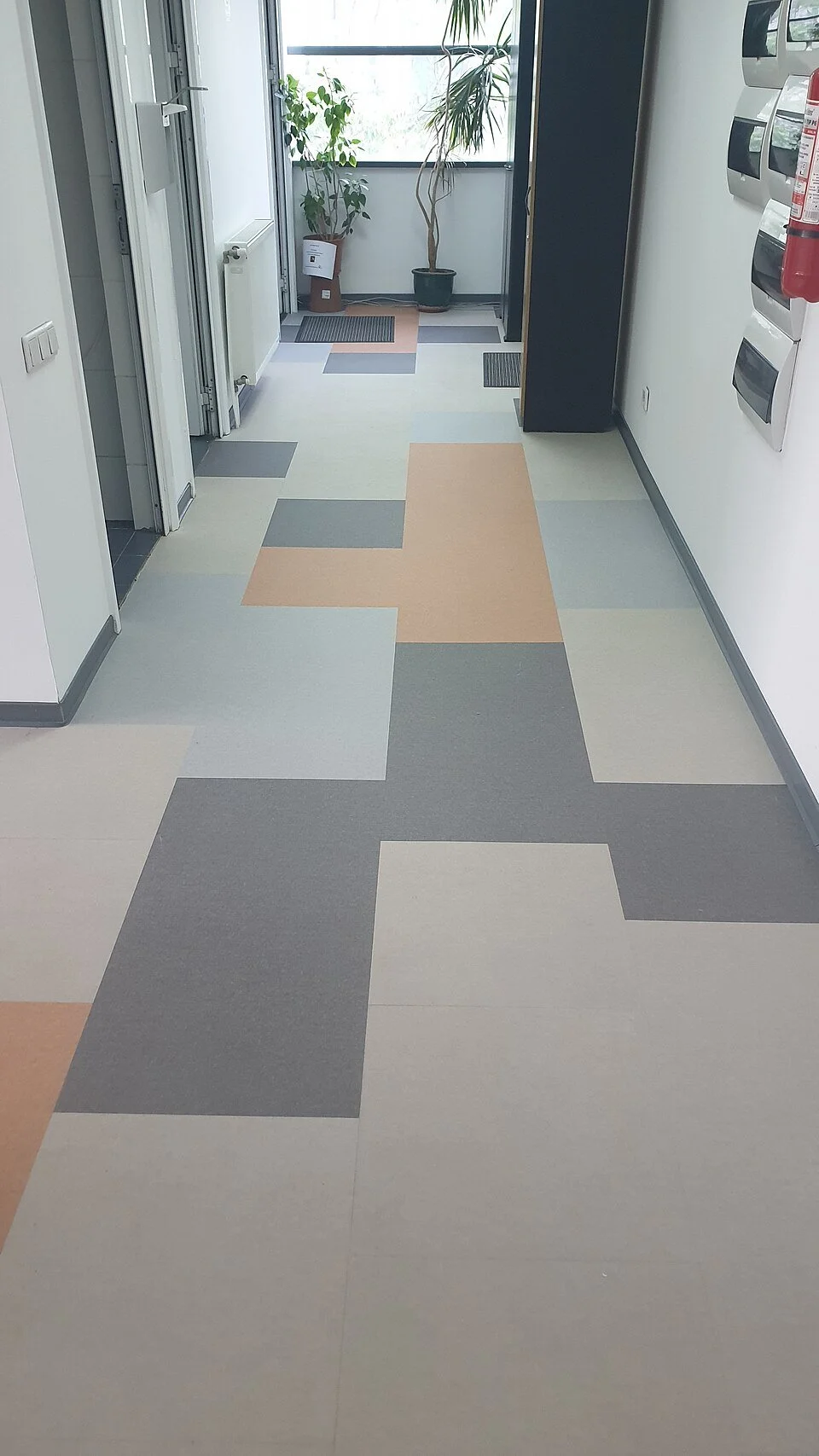
Photo: Linoleum123 / Wikimedia Commons, CC BY-SA 4.0
Vinyl flooring covers a wide range of products, from traditional sheet vinyl and commercial safety flooring to modern Luxury Vinyl Tile (LVT). Although these floors are generally designed to be durable and relatively easy to maintain, their construction and surface finish can vary considerably. A smooth domestic LVT floor, for example, should not automatically be treated in the same way as heavily textured commercial safety flooring.
For routine maintenance, a suitable neutral floor cleaner used at the correct dilution is usually appropriate. One common problem is using too much detergent. Repeated overdosing can leave residues on the surface, which may attract soil and eventually leave a floor looking dull or dirty even when it is being cleaned regularly. Effective maintenance therefore depends as much on correct dilution, agitation and removal of the dirty solution as it does on the choice of chemical.
Commercial vinyl and safety flooring can present a different challenge. Textured surfaces designed to provide additional slip resistance can trap contamination within the floor profile, where conventional mopping may struggle to remove it. Periodic deep cleaning may involve suitable cleaning chemistry, controlled dwell time and mechanical agitation using equipment and pads or brushes appropriate to the particular floor. The contaminated solution should then be thoroughly recovered and the floor rinsed where required. For commercial and heavily textured resilient floors, CleanSafe provides specialist safety flooring and vinyl floor deep cleaning using methods selected for the particular surface and level of contamination.
It is also important to establish whether an older vinyl floor has a factory-applied finish, polish or other protective coating. Some traditional vinyl flooring systems may be suitable for stripping and refinishing, while many modern LVT products have factory wear layers that should not be treated in the same way. Before stripping, polishing or applying any coating, the flooring manufacturer's guidance and the existing finish should therefore be identified wherever possible.
How should laminate floors be cleaned?
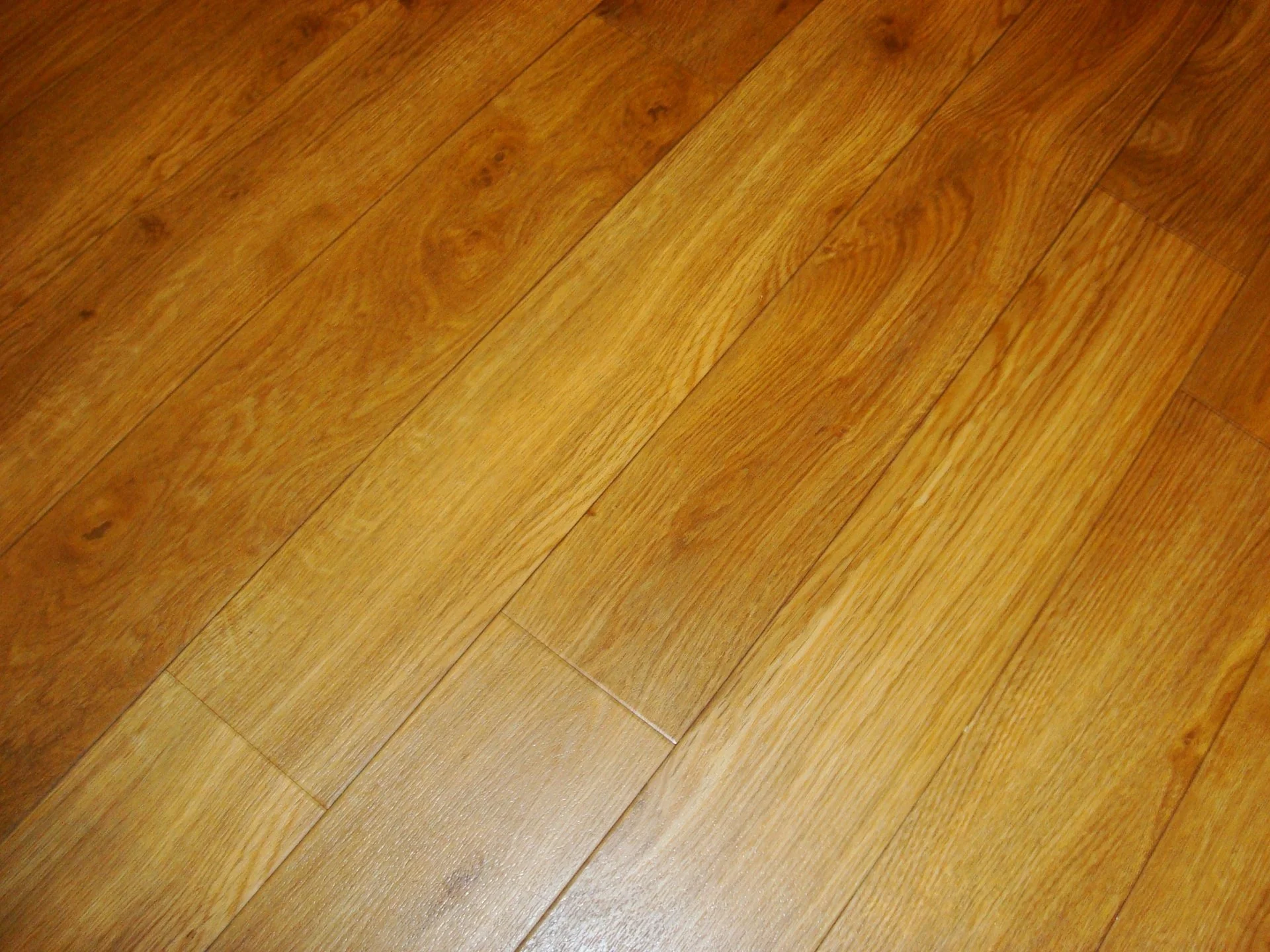
Laminate flooring can closely resemble timber, stone or tile, but its construction is very different. Most laminate consists of a decorative surface and protective wear layer over a wood-based core. This makes moisture control particularly important, as excessive water can penetrate joints or damaged areas and cause the core to swell, distort or separate.
For routine cleaning, loose grit and debris should first be removed by vacuuming or dry cleaning, followed by damp cleaning using a suitable product recommended for laminate flooring. The mop should be damp rather than saturated, and water should not be allowed to pool on the surface or remain around joints and edges. Using more water does not necessarily produce a cleaner floor and can increase the risk of damage.
Strong chemicals, abrasive pads and products designed to add wax or polish should not be used unless specifically approved for the particular flooring. Unlike a traditional solid timber floor, laminate cannot normally be sanded and refinished when the decorative surface becomes worn or damaged. Applying coatings in an attempt to restore a deteriorated wear layer can also create additional problems rather than repairing the floor.
It is therefore particularly important to distinguish between laminate that is dirty and laminate that is physically worn, swollen, scratched or damaged. Cleaning can remove contamination and residues, but it cannot reverse deterioration of the underlying material. Correct identification and conservative moisture use are generally more important than aggressive cleaning.
How should sealed hardwood and engineered wood floors be cleaned?
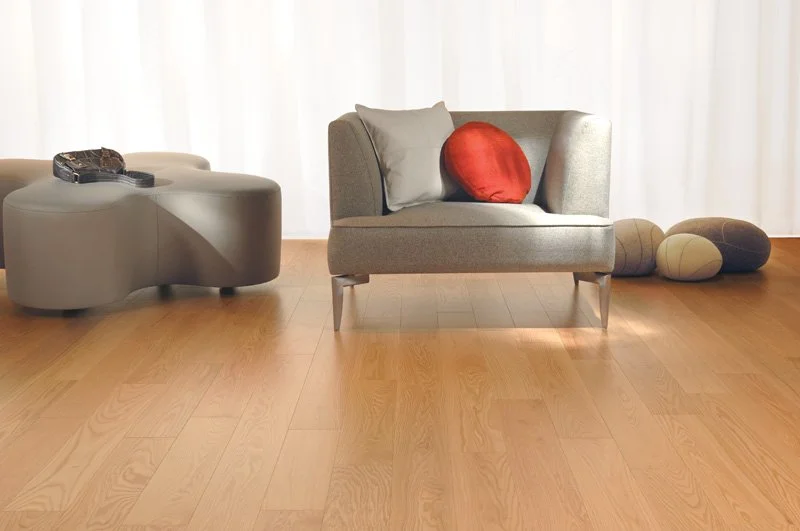
Photo: Boa-Franc / Wikimedia Commons, CC BY 2.0
Wood flooring requires a different approach because, in most cases, you are actually cleaning the protective finish on top of the timber rather than the bare wood itself. Solid hardwood and engineered wood may be protected with lacquer, polyurethane, oil, hardwax oil or another finish, and identifying that finish can be just as important as identifying the timber beneath it.
For routine maintenance, loose grit should be removed regularly because it can act as an abrasive underfoot and gradually scratch the finish. Damp cleaning can then be carried out using a product suitable for the particular wood-floor finish, with moisture kept under control. Saturating a timber floor or allowing water to remain around joints can cause swelling, staining, movement or other damage, particularly where the protective finish has become worn.
The condition of the existing coating also determines what can be achieved through cleaning. A floor may look dull because of accumulated soil or cleaning-product residue, in which case appropriate deep cleaning can produce a significant improvement. If the protective finish itself has become scratched, worn through or damaged, however, stronger cleaning will not restore it. Depending on the floor, recoating, oiling, sanding or refinishing may be required instead.
Wax, polish or oil should not be applied simply because a wood floor has lost its shine. Products intended for one finishing system can interfere with another and may complicate future restoration. Before carrying out intensive cleaning or applying any treatment, it is therefore important to establish whether the floor is lacquered, oiled or otherwise finished and assess the condition of that protective layer.
What does pH-neutral floor cleaner actually mean?
The pH scale measures how acidic or alkaline a solution is. A pH of around 7 is considered neutral, while lower values are acidic and higher values are alkaline. In floor cleaning, this matters because different surfaces and finishes can react differently to cleaning chemistry.
A pH-neutral floor cleaner is generally designed to clean without relying on strongly acidic or alkaline chemistry. This makes neutral cleaners particularly useful for routine maintenance and for surfaces where aggressive chemicals are unnecessary or potentially damaging. Natural stone, sealed floors and many modern resilient floor coverings are commonly maintained with an appropriate neutral cleaner, although the manufacturer's recommendations should always take priority.
However, pH-neutral does not mean that a product is automatically suitable for every floor, nor does it mean that stronger chemistry should never be used. Heavy grease, embedded soil, old polish, mineral deposits and other specific types of contamination may require a different cleaning product. Professional deep cleaning sometimes uses alkaline or specialist acidic chemistry, but only after the floor and the contamination have been identified and the suitability of the treatment established.
The important principle is therefore not to search for the strongest floor cleaner. It is to use the least aggressive chemistry capable of doing the required job safely and effectively. For everyday maintenance, that will often be a correctly diluted pH-neutral cleaner. For restoration or heavy contamination, the correct solution may be very different.
How can I tell what type of floor I have?
Identifying a floor from appearance alone is not always straightforward. Modern porcelain and LVT can imitate natural stone or timber extremely convincingly, while terrazzo, polished concrete and some manufactured tiles can also look surprisingly similar. Before using specialist chemicals, attempting to strip a finish or carrying out restoration work, it is worth establishing what the floor actually is.
Start by looking for repetition. Natural stone normally contains genuine variation in colour, veining and pattern from one piece to another. If exactly the same knots, veins or markings appear repeatedly across several tiles or planks, that can indicate a manufactured surface such as porcelain, ceramic, laminate or LVT. The edges and joints can provide further clues. A chipped ceramic tile may reveal a different-coloured body beneath the glaze, while through-body porcelain may look relatively consistent through its thickness.
Touch and texture can also help, although neither is conclusive on its own. Natural stone often has subtle variations in texture and surface finish, while LVT and laminate may have printed or embossed patterns designed to reproduce timber or stone. Timber itself will normally show natural variation in grain, but engineered wood can look almost identical to solid hardwood from above because its upper surface is real timber.
Existing finishes can make identification more difficult. Stone may have been sealed or polished, timber may be lacquered or oiled, and older vinyl floors may carry layers of polish. This means there are really two questions to answer: what is the floor made from, and what has been applied to it?
For professional work, visual identification can be supplemented by examining inconspicuous edges, thresholds or damaged areas, checking installation or manufacturer information where available, and carrying out appropriate tests when necessary. No single test should automatically be relied upon for every material.
If you are unsure what floor you have, it is safer to identify it before experimenting with strong chemicals, acids, stripping agents, sealers or polishing products. The wrong treatment can turn a relatively simple cleaning problem into a restoration problem.
Floor cleaning guide at a glance
-
Routine cleaning: Suitable pH-neutral cleaner.
Main caution: Consider grout, surface finish and surrounding materials before using stronger chemistry.
-
Description:
Routine cleaning: A suitable pH-neutral cleaner is generally appropriate.Main caution: Establish whether the tile is glazed or unglazed, as this can affect its porosity and how it should be cleaned.
-
Description:
Routine cleaning: A suitable neutral cleaner can be used for regular maintenance, with deeper cleaning where contamination has become embedded.Main caution: The cleaning chemistry must also be suitable for the surrounding tile or stone, particularly where grout is installed alongside acid-sensitive natural stone.
-
Description:
Routine cleaning: Use a suitable pH-neutral cleaner formulated for natural stone.Main caution: Avoid acidic products, including vinegar and limescale removers. Acids can react with marble and cause etching or dull marks that cleaning alone cannot remove.
-
Description:
Routine cleaning: Use a suitable pH-neutral cleaner formulated for natural stone.Main caution: Both are acid-sensitive stones. Avoid vinegar, acidic bathroom cleaners and limescale removers, which can etch or alter the surface.
-
Description:
Routine cleaning: A suitable pH-neutral cleaner formulated for natural stone is generally appropriate.Main caution: Granite is generally more chemically resistant than marble or limestone, but different granites, sealers, grout and surrounding materials can behave differently. Avoid assuming that stronger chemistry is automatically safe.
-
Description:
Routine cleaning: A suitable pH-neutral cleaner is generally appropriate for regular maintenance.Main caution: Traditional terrazzo may contain marble or other acid-sensitive aggregates within a cement-based binder. Avoid indiscriminate use of acidic cleaners, and identify any existing sealer, polish or protective finish before deeper treatment.
-
Description:
Routine cleaning: A suitable pH-neutral natural stone cleaner is generally a sensible choice.Main caution: Porosity and surface texture can vary considerably, and the stone may already have an impregnating, colour-enhancing or topical treatment. Identify the stone and any existing sealer before using stronger chemistry or attempting to strip the floor.
-
Description:
Routine cleaning: Use a suitable neutral floor cleaner at the correct dilution, with the cleaning solution and loosened soil properly removed from the surface.Main caution: Vinyl products vary considerably. Traditional vinyl, commercial safety flooring and modern LVT may have different wear layers and finishes. Identify the flooring and any existing polish or coating before attempting to strip, polish or refinish it.
-
Description:
Routine cleaning: Use a suitable laminate floor cleaner with minimal moisture. Remove loose grit first and use a damp rather than saturated mop.Main caution: Avoid excessive water and standing moisture, particularly around joints and edges. Laminate cannot normally be sanded and refinished like solid timber if its decorative wear layer becomes damaged.
-
Description:
Routine cleaning: Remove loose grit regularly and use a cleaner suitable for the existing wood-floor finish, keeping moisture carefully controlled.Main caution: Establish whether the floor is lacquered, oiled, hardwax-oiled or otherwise finished before applying specialist cleaners, oils, waxes or polishes. Cleaning can remove contamination, but it cannot repair a protective finish that has worn through.
This guide is intended as general guidance rather than a substitute for identifying the individual floor. Manufacturer instructions, existing sealers or coatings, previous treatments and the condition of the surface can all affect which cleaning method is appropriate.
When Does a Floor Need Deep Cleaning, Stripping, Polishing or Sealing?
Deep cleaning, stripping, polishing and sealing are different processes, and they should not be treated as interchangeable ways of making a floor look better. The correct process depends on what the floor is made from, what has previously been applied to it and what is actually causing the deterioration in appearance.
Deep cleaning is intended to remove contamination that routine maintenance no longer removes effectively. This may include embedded soil, grease, cleaning residues and contamination held within textured surfaces or grout lines. Appropriate cleaning chemistry and mechanical agitation can often produce a substantial improvement without altering the floor itself.
Stripping is different. It involves removing an existing topical finish, polish or coating before a new finish is applied. This is appropriate only for flooring systems designed to accept such treatments. A floor should never be stripped simply because it looks dull, as some modern surfaces have factory-applied wear layers that are not intended to be removed.
Polishing can also mean different things depending on the floor. Traditional floor polish may be a coating applied to certain resilient floors, while polishing marble, terrazzo and other suitable stone surfaces can involve mechanically refining the material itself to produce the desired finish. These are fundamentally different processes despite sharing the same word.
Sealing is primarily about reducing the absorption of liquids and contaminants into porous materials such as natural stone, grout and some other surfaces. It does not necessarily make a floor shiny, nor does it make the surface stain-proof or maintenance-free. Different sealers also perform different functions, which is why the product should be selected for the particular material and intended use.
Before deciding that a floor needs stripping, polishing or sealing, the first question should therefore be why it no longer looks or performs as expected. Sometimes the answer is simply deeper cleaning. In other cases, the existing finish may need attention or the surface itself may require professional restoration.
How Can You Tell If a Floor Has Already Been Sealed?
It is not always obvious whether a floor has been sealed, particularly when an impregnating sealer has been used. Unlike a topical coating, which forms a visible film on the surface, an impregnating sealer penetrates into porous material and may leave little or no visible change once cured.
One useful indicator is how readily the surface absorbs water. On suitable natural stone or grout, a small amount of clean water placed on an inconspicuous area can provide useful information. If the surface darkens relatively quickly as the water is absorbed, the material may be unsealed or the existing sealer may no longer be providing effective protection. If the water remains on the surface for longer with little change in colour, an effective impregnating treatment may be present. This is only an indicator, however, and should not be treated as definitive proof of the type of sealer used.
Topical coatings can sometimes be identified by their appearance, wear patterns or by examining inconspicuous edges and corners. A coating may produce a particular sheen, show scratches or wear differently in high-traffic areas. Older floors can be more complicated because several generations of polish, sealer or maintenance products may have accumulated over time.
It is also important to remember that a previously sealed floor does not necessarily need to be sealed again. The existing treatment, its condition, the porosity of the material and the intended use of the floor should all be considered. Applying a new product over an unidentified existing treatment can lead to poor penetration, uneven appearance or compatibility problems.
For professional restoration work, identifying existing treatments can therefore involve a combination of visual assessment, absorption testing, knowledge of the flooring material and, where necessary, controlled testing in an inconspicuous area.
Frequently Asked Questions - Cleaning Different Floor Types
-
There is no single cleaner that is best for every floor. A suitable pH-neutral cleaner is often a good choice for routine maintenance, but the correct product depends on the flooring material, its finish or sealer, its condition and the type of contamination being removed. Identifying the floor should come before choosing the cleaning product.
-
Not automatically. A pH-neutral cleaner is often suitable for routine maintenance on many hard floors, but pH alone does not determine whether a product is appropriate. The flooring material, existing finish or sealer and the manufacturer's instructions should also be considered. Some surfaces, particularly wood and laminate, may require products specifically formulated for that type of floor.
-
Vinegar should not be used on acid-sensitive natural stone such as marble, limestone or travertine. The acid can react with the stone and cause etching, dull patches or other surface damage. A suitable pH-neutral cleaner formulated for natural stone is generally a safer choice for routine maintenance.
-
Start by looking at the pattern, texture, joints and any exposed edges or damaged areas. Repeating patterns can indicate manufactured materials such as porcelain, LVT or laminate, while natural stone and timber usually show genuine variation. Existing coatings and sealers can make identification more difficult, so where the floor is uncertain, it is safer to identify or test the surface before using strong chemicals or attempting restoration.
-
Not necessarily. A floor can appear dull because of embedded soil, cleaning-product residue, wear, scratching, etching or deterioration of an existing finish. Deep cleaning may restore the appearance in some cases, while others may require honing, polishing, recoating or another restoration process. The cause of the dullness should be identified before deciding on treatment.
-
There is no fixed interval that suits every floor. The appropriate frequency depends on the flooring material, footfall, type of property, maintenance routine and the amount of contamination being introduced. Busy commercial floors may require periodic professional deep cleaning, while a well-maintained domestic floor may need specialist attention much less frequently. The condition of the floor is usually a better guide than an arbitrary cleaning schedule.
Professional Hard Floor Cleaning & Restoration in Sligo, Leitrim and Donegal
CleanSafe provides specialist hard floor cleaning and restoration for homes, businesses and public-sector properties across Sligo, Leitrim, Donegal and surrounding areas. We work with a range of surfaces including porcelain and ceramic tile, grout, natural stone, marble, limestone, terrazzo, vinyl and commercial safety flooring.
Our approach begins with identifying the floor, assessing its condition and understanding any existing sealers, coatings or finishes. From there, we can select an appropriate cleaning or restoration process rather than applying the same products and methods to every surface.
Depending on the floor and its condition, this may involve deep cleaning, mechanical agitation, stain treatment, stripping of suitable existing finishes, honing, polishing, sealing or other specialist processes. Where restoration is not required, we can also advise on an appropriate maintenance approach to help keep the floor performing and looking its best.
If you're unsure what type of floor you have, why it has become difficult to clean or whether it needs cleaning, polishing or restoration, photographs can often help us make an initial assessment before arranging a site visit where required.